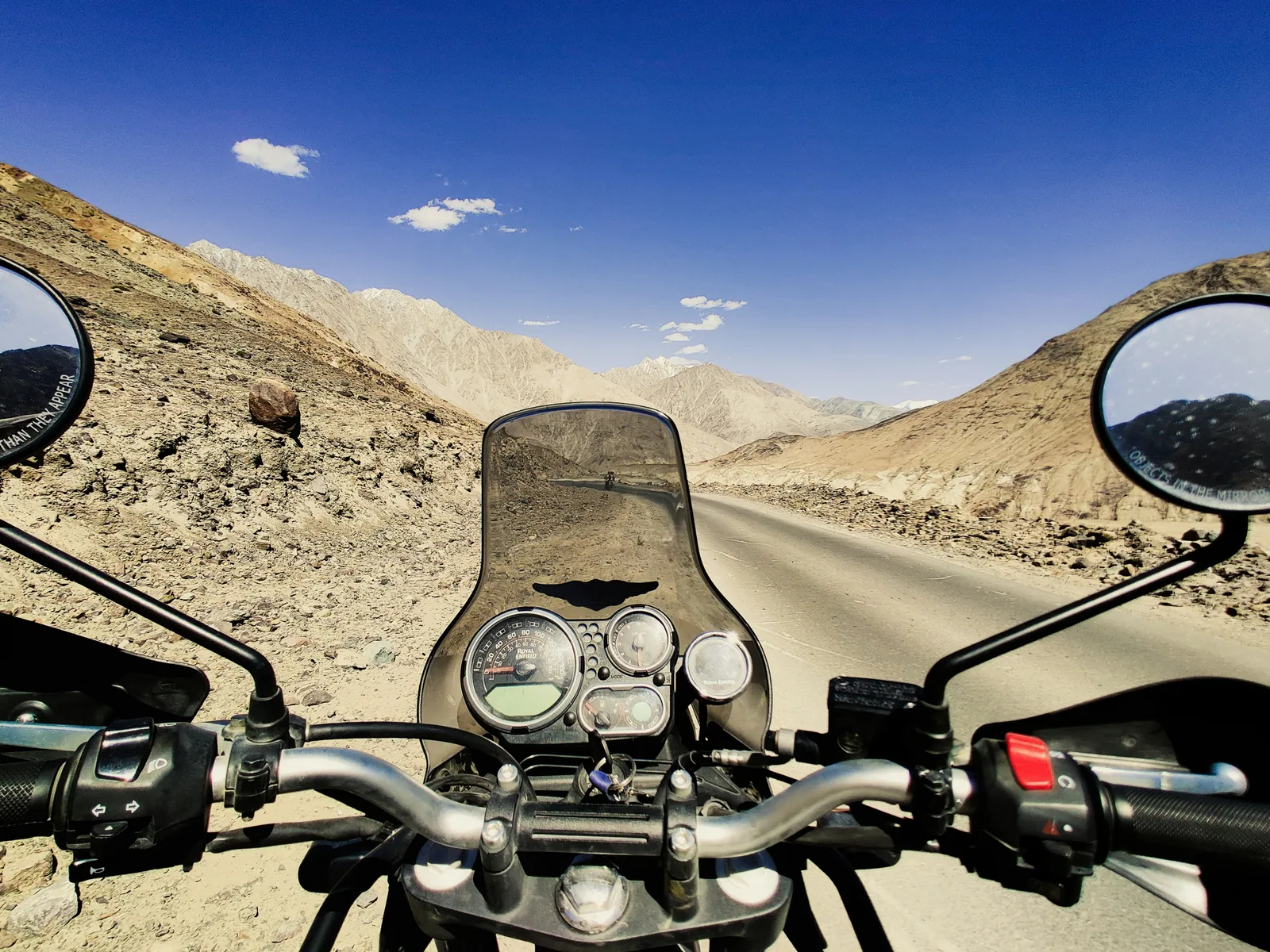
The ride to Leh Ladakh is on every Indian biker's bucket list — and for good reason. The roads through Manali–Leh and Srinagar–Leh highways pass through some of the most dramatic scenery on earth: barren lunar landscapes, turquoise lakes, sky-high passes, and ancient Buddhist monasteries perched on cliffsides.
But Ladakh is also remote, cold, and completely unpredictable. The difference between a great trip and a miserable one often comes down to how well you packed. This list is based on years of organising Ladakh bike tours — covering everything from riding gear to tools to the documents you must not forget.
Quick Trip Overview
- Route options: Manali–Leh (2 days), Srinagar–Leh (2 days), or the full loop
- Highest pass: Khardung La at 5,359m (one of the highest motorable roads in the world)
- Best season: June to September
- Typical duration: 10–14 days for a full circuit
- Most popular bike: Royal Enfield Himalayan or Classic 350/500
Riding Gear — Safety First
This section is non-negotiable. Ladakh's roads are rough, remote, and sometimes shared with military convoys. Falls happen. A proper helmet and protective gear can save your life or prevent serious injury.
Essential riding gear:
- Full-face helmet — the only acceptable option for this terrain. Half-face helmets leave your face exposed to cold and debris.
- Riding jacket with CE-rated armour at shoulders and elbows, and back protector pocket. Ideally with a detachable thermal liner for cold mornings and high passes.
- Riding gloves — two pairs: heated or thick winter gloves for passes, lighter summer gloves for warmer sections.
- Knee and shin guards — often overlooked but important given the terrain.
- Riding boots — ankle protection is essential. Sneakers are not acceptable.
- Riding trousers with knee armour, or separate knee guards worn over regular trousers.
- High-visibility vest — useful in tunnels and when overtaking trucks.
Clothing
Ladakh has extreme temperature swings. You can start a day in Leh at 25°C and be crossing Khardung La at -5°C two hours later. Pack for all conditions.
Base and mid layers:
- Thermal base layer tops and bottoms (2 sets minimum)
- Fleece jacket or pullover (2)
- Regular t-shirts (3–4) for evenings in town
- Light trekking trousers (2 pairs)
- Jeans — one pair is fine for off-bike exploring
- Warm socks (5–6 pairs — wool is best)
- Underwear (5–6 pairs — quick-dry fabric)
Outer layers:
- Windproof and waterproof riding jacket (your gear jacket should cover this)
- Light down jacket for camp evenings and high camp stops
- Wool or fleece hat that fits under your helmet
- Balaclava — essential for cold passes
- Neck gaiter / buff
Bike Tools and Spares
Petrol stations are sparse. Mechanics are even more sparse. Between Manali and Leh there are long stretches with no mobile signal and no help. Carry the basics.
Tools:
- Puncture repair kit and tyre levers
- Portable air pump (12V electric or hand pump)
- Basic toolkit: spanners, Allen keys, screwdrivers matched to your bike
- Chain lube and chain link repair kit
- Electrical tape and zip ties (solve more problems than you'd expect)
- Spare spark plugs for your specific engine
- Clutch and brake cable spares
- Jump starter cable or portable jump pack
- Duct tape
Spares and fluids:
- Engine oil (1–2 litres extra)
- Brake fluid
- Coolant (if your bike uses it)
- Extra fuel — a 2-litre jerry can is wise on the Manali–Leh stretch
Luggage and Packing Setup
How you carry your gear matters as much as what you carry. The wrong setup makes the bike unstable and your body exhausted.
- Saddle bags / panniers — hard cases are more protective; soft bags are lighter. Distribute weight evenly on both sides.
- Tank bag — great for documents, phone, snacks, and camera. Quick access without stopping.
- Tail bag — for your sleeping bag or extra layer that you might need quickly.
- Dry bags — pack everything inside waterproof dry bags. It will rain. Things will get wet.
- Keep your total luggage under 15 kg. Every extra kilo affects handling on mountain roads.
Health and Medicines
Altitude sickness can hit even experienced bikers. The Manali–Leh highway climbs fast and some riders do not allow enough time to acclimatise.
- Diamox (acetazolamide) — discuss with your doctor. Taken preventively from the day before you begin ascending.
- Ibuprofen and paracetamol
- Antacids — spicy roadside food at altitude can be rough on the stomach
- Oral rehydration salts
- Antiseptic cream and bandages
- Blister plasters
- Eye drops — dust on mountain roads is relentless
- Lip balm with SPF — your lips will crack at altitude without it
- Sunscreen SPF 50+
- Personal prescription medications with extra supply
- Pulse oximeter — monitor your blood oxygen levels as you ascend
Documents — Do Not Leave Without These
Ladakh has military checkpoints. You will be stopped and asked for documents. Missing paperwork means being turned back.
- Valid driving licence — carry original, not photocopy
- Vehicle registration certificate (RC) — original
- Insurance certificate — valid and current
- PUC certificate (Pollution Under Control)
- Aadhaar card or passport — for Inner Line Permits
- Inner Line Permit (ILP) — required for Nubra Valley, Pangong Lake, and Tso Moriri. Can be obtained online at dc-leh.nic.in or in Leh.
- NOC from bike owner — if the bike is borrowed or rented, carry an NOC letter from the registered owner.
Pro Tip: Keep Digital Copies
Scan or photograph every document and save them to Google Drive or WhatsApp with yourself. If originals are lost or damaged, having digital copies accessible offline can save the day at checkpoints.
Gadgets and Navigation
- Phone mount for the handlebar — offline Google Maps or Maps.me works without signal
- Action camera (GoPro or equivalent) with mounts
- Portable power bank — 20,000 mAh minimum
- USB charger adapter wired to bike battery
- Bluetooth headset that fits inside your helmet — useful for navigation audio
- BSNL SIM card — it is the only network with reliable signal in remote Ladakh
Camping vs Hotels
Most bikers stay in guesthouses and hotels along the route — there is a good network from Manali through Keylong, Jispa, Sarchu, Pang, and into Leh. If you plan to wild camp, add a sleeping bag rated to -10°C, a compact tent, and a camping stove to your list.
If staying in hotels, you can leave the camping gear behind and save considerable weight. For a first Ladakh trip, we recommend staying in guesthouses — you will meet other riders, share route updates, and have a hot meal after a long day.