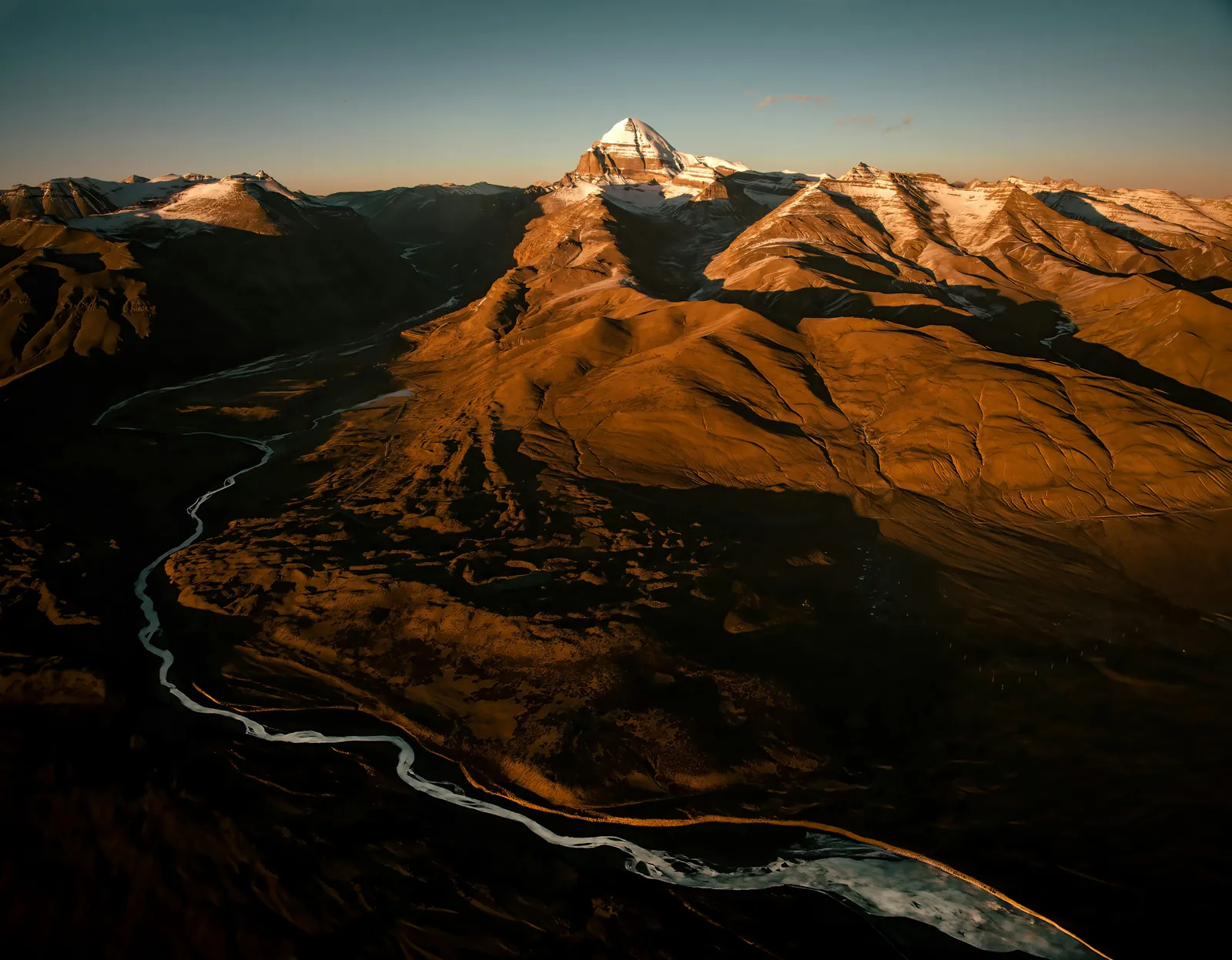
The Kailash Mansarovar Yatra is considered one of the most sacred pilgrimages in the world. For Hindus, it is the abode of Lord Shiva. For Buddhists, it is the centre of the universe. For Jains and Bon followers, it holds equal spiritual significance. Located in the remote Tibetan plateau at an altitude of 6,638 metres, Mount Kailash draws thousands of pilgrims every year despite its challenging conditions.
If you are planning to undertake this life-changing journey in 2026, this guide covers everything — routes, permits, physical preparation, costs, and what to genuinely expect along the way.
Why Kailash Mansarovar is Unlike Any Other Pilgrimage
Mount Kailash has never been summited. Climbing it is considered sacrilegious across all the religions that revere it, and no government has issued permits to do so. What pilgrims undertake instead is the Parikrama — a circumambulation of the mountain, typically 52 km over three days at altitudes between 4,600 and 5,630 metres.
Lake Manasarovar, one of the highest freshwater lakes in the world at 4,590 metres, sits at the foot of Kailash. Taking a dip in its sacred waters is considered to cleanse all sins accumulated over a lifetime. The combination of the Parikrama and the Manasarovar bath makes this yatra spiritually complete.
Quick Facts
- Location: Tibet Autonomous Region, China
- Altitude of Mt. Kailash: 6,638 metres
- Lake Manasarovar altitude: 4,590 metres
- Parikrama distance: ~52 km over 3 days
- Best season: May to September
- Duration: 13–21 days depending on route
Routes to Kailash Mansarovar
There are three main routes available to Indian pilgrims. Each has different requirements, costs, and physical demands.
1. Aerial Darshan (Helicopter from Nepalganj or Lucknow)
The newest and most accessible option. You fly over Mount Kailash and Lake Manasarovar by helicopter without actually setting foot on Tibetan soil. There is no passport requirement, no Chinese visa, and no age restriction. The entire trip can be completed in 8–11 days. This is ideal for elderly pilgrims or those with health conditions who wish to see Kailash without the physical demands of the overland route.
2. Helicopter Yatra via Lucknow / Kathmandu
You fly to Kathmandu or Nepalganj, then take a helicopter to the Kailash region. You actually land near Lake Manasarovar and can do the Parikrama. Requires a Chinese visa and Tibet Travel Permit. Duration is typically 11–13 days. Less strenuous than the full overland route but still requires reasonable fitness as you will be at high altitude.
3. Overland Yatra from Kathmandu
The traditional route. You travel overland from Kathmandu through Tibet by road, spending time acclimatising at key stops including Kyirong, Saga, and Paryang before reaching Darchen — the base for the Parikrama. This route takes 13–17 days and gives you the full experience of the Tibetan plateau. It is the most physically demanding but also the most spiritually immersive.
Permits and Documentation
Getting the paperwork right is critical. Kailash is in Tibet, which means Chinese government permissions are required for the overland and helicopter routes.
What you need for the overland / helicopter yatra:
- Valid Indian passport with at least 6 months validity
- Chinese Group Visa — individual visas are not issued for Tibet; all pilgrims must travel as a group
- Tibet Travel Permit (TTP) — issued by the Tibet Tourism Bureau
- Alien's Travel Permit (ATP) — required for restricted areas near Kailash
- Military Permit — required for certain border areas
All permits are arranged through a registered tour operator. Do not attempt to arrange these independently — it is not possible for foreign nationals to do so for Tibet.
Important Note on the Aerial Darshan Route
If you choose the Aerial Darshan (flyover) option, you do not need any of the above permits. No Chinese visa, no Tibet permit. Just a valid ID. This makes it accessible to anyone regardless of age or health condition.
Best Time to Visit
The Kailash Mansarovar Yatra season runs from May to September. Outside this window, the passes are blocked by snow and the Chinese authorities do not issue permits.
- May–June: Early season, cooler temperatures, fewer crowds. Weather can be unpredictable with occasional snowfall.
- July–August: Peak season. Warmer days but monsoon rains can cause route disruptions. The landscape is greenest and most beautiful.
- September: Late season. Weather stabilises after monsoon. Excellent visibility and comfortable temperatures. Popular among experienced trekkers.
We generally recommend late May, early June, or September for the best combination of weather, visibility, and manageable crowds.
Physical Preparation
This is where most pilgrims underestimate the challenge. The Kailash Parikrama takes you to Dolma La Pass at 5,636 metres — higher than Everest Base Camp. Altitude sickness is a real risk, and the terrain on day two of the Parikrama is steep and demanding.
At least 3 months before departure:
- Begin daily cardio — brisk walking, cycling, or swimming for 45–60 minutes
- Include uphill walking or stair climbing to build leg strength
- Practice breathing exercises (pranayama is genuinely useful at high altitude)
- Consult a doctor for a general fitness assessment and discuss Diamox (acetazolamide) for altitude sickness prevention
Acclimatisation during the yatra:
Good tour operators build acclimatisation days into the itinerary. Do not skip these. Rushing to altitude is the most common reason pilgrims have to turn back. Drink 3–4 litres of water daily, avoid alcohol, and rest whenever you feel any symptoms of altitude sickness — headache, nausea, dizziness, or shortness of breath.
What to Pack
- Thermal base layers — temperatures at Kailash can drop to -10°C at night even in summer
- Waterproof jacket and trousers
- Sturdy trekking boots — already broken in before the trip
- Trekking poles — essential for the Parikrama
- Sunscreen SPF 50+ — UV radiation is extreme at altitude
- Sunglasses with UV protection
- Personal medications and first-aid kit
- Water purification tablets
- Snacks — energy bars, dry fruits, nuts
- Portable charger — electricity is unreliable in remote areas
Costs and What's Included
The cost of the yatra varies significantly by route. As a rough guide for 2026 from Delhi:
- Aerial Darshan: ₹75,000 – ₹1,20,000 per person
- Helicopter Yatra (via Kathmandu): ₹1,40,000 – ₹2,00,000 per person
- Overland Yatra (13–14 nights): ₹1,80,000 – ₹2,60,000 per person
A good package should include flights, accommodation, all meals, transport within Tibet, all permits, an experienced guide, oxygen cylinders, and yak/porter support for the Parikrama. Always confirm exactly what is included before booking.
Tips from Our Experience
- Book at least 4–6 months in advance. Chinese permits are limited and batches fill up quickly.
- Travel with a reputable, experienced operator. The logistics of Tibet are complex and things can go wrong — you want someone who has handled this before.
- Do not attempt to do the Parikrama in one day. It is three days for a reason.
- Carry cash in Chinese Yuan (CNY) — cards are not accepted in most of Tibet.
- Respect local customs. Do not touch or walk on religious structures. Always walk clockwise around Kailash.